
Sleep Disorders
Sleep disorders are conditions that disrupts the body’s ability to sleep and get rest. There are more than 80 different sleep disorders, and categories have changed over the years. The International Classification of Sleep Disorders (ICSD) has released the latest edition, ICSD-3R. According to ICSD-3R, categories include insomnia, sleep-related breathing disorders, central disorders of hypersomnolence, parasomnias, sleep-related movement disorders, and circadian rhythm sleep-wake disorders. Note that this list is updated for the latest information.
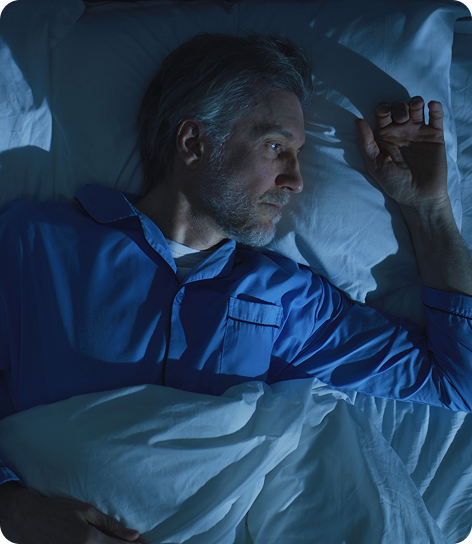
Some common sleep disorders include:
Chronic Insomnia
Inability to fall or stay asleep for most nights for three months or more.
Obstructive Sleep Apnea
Snoring and having moments when breathing stops, disrupting sleep.
Restless Legs Syndrome
Moving or twitching legs during sleep affects rest.
Narcolepsy
Inability to regulate falling asleep or how long one is awake
Shift Work Sleep Disorder
Lack of sleep or inability to sleep leading to feeling sleepy at odd hours.
Delayed Sleep Phase Syndrome
Falling asleep late by two hours or more and inability to wake up on time.
Experts suggest that adults need at least seven hours of good sleep each night.
Insomnia Symptoms
There are different symptoms of sleep disorders, which again may vary between patients. Some include:
- Insomnia symptoms, such as difficulty falling asleep, difficulty staying asleep, and waking up too early
- Snoring or gasping for breath during sleep
- Feeling that one cannot move after waking up
- Excessive sleepiness or excessive daytime sleepiness, which can affect cognitive function and mood
- Behavioral changes, like a lack of focus or attention
- Mood changes
- Sudden loss of muscle tone, which can occur in sleep disorders like narcolepsy
Chronic insomnia is diagnosed when insomnia symptoms occur at least three times per week for at least three months.
Excessive daytime sleepiness is a common clinical presentation of sleep-disordered breathing and hypersomnia, and its severity can be measured by tools like the Epworth sleepiness scale and fatigue severity scale. Patients with hypersomnia often complain of disabling excessive daytime sleepiness and find it difficult to maintain alertness during significant waking hours.
Sleep onset latency refers to the time it takes to fall asleep and is often prolonged in insomnia and other sleep disorders.
Poor quality sleep can lead to fatigue, irritability, and problems focusing during the day.
In short, if you think you are unable to sleep or cannot fall asleep at night, and the pattern has been continuing for a long time, see a doctor.
Types of Sleep Disorders
There are many types of sleep disorders, each affecting the sleep-wake cycle in different ways. Insomnia is the most common sleep disorder, marked by difficulty falling asleep or staying asleep, which can lead to poor sleep quality and daytime sleepiness.
Sleep Apnea
Sleep apnea, including both obstructive sleep apnea and central sleep apnea, involves repeated interruptions in breathing during sleep, often resulting in excessive daytime sleepiness and increased health risks.
Restless Legs Syndrome
Restless legs syndrome causes uncomfortable sensations in the legs, making it hard to fall asleep or stay asleep.
Narcolepsy
Narcolepsy is a neurological disorder that disrupts the brain’s regulation of sleep and wakefulness, leading to sudden sleep attacks and extreme daytime sleepiness.
Circadian Rhythm Disorders
Circadian rhythm disorders, such as delayed sleep phase syndrome, disturb the body’s internal clock, making it challenging to fall asleep or wake up at desired times.
Understanding the different sleep disorders is essential for identifying symptoms and seeking appropriate treatment to improve sleep quality and overall health.
Causes
Disruptions to daily routine and the overall sleep cycle can cause sleep disorders. Factors include:
Medical conditions like heart disease, asthma, and nerve issues
- Mental health conditions, like depression or anxiety
- Medication side effects
- Working on night shifts
- Consumption of caffeine and alcohol before bedtime
- Low levels of certain chemicals in the brain.
The risk of sleeping disorders increases with stress, late shifts, and underlying health conditions. Not sleeping enough can make it difficult to remember things and further increase the risk of other health issues, including obesity, diabetes, heart disease, dementia, and depression.

Sleep Quality
Good sleep quality is vital for maintaining both physical and mental health. When sleep is disrupted or of poor quality, it can lead to sleep deprivation, excessive daytime sleepiness, and a greater risk of chronic conditions like heart disease, diabetes, and obesity.
Factors that influence sleep quality include your sleep environment, daily habits, and lifestyle choices such as caffeine or nicotine use, exercise routines, and stress management. Practicing good sleep hygiene—like sticking to a regular sleep schedule, creating a calm and comfortable bedroom, and avoiding stimulating activities before bed—can significantly improve sleep quality. Relying on natural sleep-wake cycles rather than sleep aids also supports better, more restorative sleep. Prioritizing sleep quality not only helps prevent excessive daytime sleepiness but also supports better mental health and overall well-being.
Lifestyle Factors
Your daily lifestyle choices have a major impact on your risk for sleep disorders and the quality of your sleep. Irregular work schedules, frequent travel, and social commitments can disrupt normal sleep patterns, leading to sleep deprivation and excessive daytime sleepiness.
Diet, exercise, and stress levels also play a role in how well you sleep. Eating a balanced diet, engaging in regular physical activity, and practicing stress reduction techniques like meditation or yoga can all contribute to better sleep quality. Avoiding caffeine, nicotine, and screen time before bed helps support healthy sleep hygiene.
Additionally, making your bedroom a cool, dark, and quiet space can promote restful sleep. By adopting healthy lifestyle habits and prioritizing good sleep hygiene, you can reduce your risk of developing sleep disorders and enjoy more restorative, high-quality sleep.

Diagnosis with Sleep Study
Healthcare providers usually check symptoms and discuss patterns to diagnose sleep disorders. After a physical exam, your doctor may ask you to maintain a sleep diary, which will help identify patterns and whether you are taking naps. In some cases, primary doctors may recommend seeing a sleep specialist, who will then perform a polysomnogram, also called a sleep study.
During the diagnostic process, it is important to consider other sleep disorders such as sleep apnea, narcolepsy, hypersomnia, and circadian rhythm disorders to ensure an accurate diagnosis and tailored treatment plan. Sleep medicine is a specialized field focused on diagnosing and managing sleep disorders, often involving an interprofessional healthcare team to provide comprehensive care.
Your Diagnostic Options
You may also have to answer questions such as how many hours you sleep each night, whether you toss and turn frequently, whether you take daily naps, and how long it takes you to fall asleep. They will also ask whether you work the night shift and if there have been recent changes in your life. There is no single test to diagnose sleep disorders; rather, patterns and symptoms help identify likely concerns. Not everyone needs these tests. Your healthcare provider will decide whether you need additional diagnostic steps. Additionally, more tests can be considered, like:
Multiple Sleep Latency Test (MSLT)
Measures sleepiness during the day through naps spaced two hours apart. The test checks the time required to fall asleep each time.
Maintenance of Wakefulness Test (MWT)
Measures daytime alertness. The person is asked to stay in a quiet, dark room and take four to five naps, two hours apart, like the MSLT test. MWT measures the ability to stay awake.
Treatment and Sleep Hygiene
Doctors treat various sleep disorders in different ways, which may include medications, therapy, and lifestyle changes. Your healthcare provider may recommend the following:
- Practice good sleep hygiene, which is fundamental for managing sleep disorders. This includes maintaining a regular sleep schedule, creating a conducive sleep environment, and avoiding stimulants.
- Sleep hygiene education, which involves addressing lifestyle and environmental factors that may interfere with sleep.
- Changing sleeping routines
- Cognitive behavioral therapy
- Sleeping pills
- Supplements like melatonin, which can help people fall asleep faster and stay asleep longer.
- Changing current medications or dosages
- CPAP machine for sleep apnea
- Light therapy, including light-phase shift therapy for sleep disturbances associated with circadian rhythm abnormalities.
As we mentioned, there are different sleep disorders, and medications are selected as required. If you have insomnia, you may benefit from sleep aids, such as zolpidem, zaleplon, and eszopiclone. For restless leg syndrome, gabapentin enacarbil or pregabalin can help. Narcolepsy treatment is often done using modafinil, armodafinil, pitolisant, and sodium oxybate. Lifestyle changes can improve sleep considerably, and these include:
- Creating a proper sleep environment
- Effective stress management
- Keeping the bed limited for sleeping
- Establishing a bedtime routine
- Exercise
When to Reach Out
If you are unable to sleep for a few days and are located in Westchester or NYC, we are here to help. Chester Neurology has all the testing facilities and an expert team to offer comprehensive care. We understand that sleep disorders can take a toll on your overall health, which is why our doctors and healthcare providers are committed to tailoring your treatment plan.
Call us today at (914) 816-1941 or email info@chesterneurology.com to schedule an appointment.
We serve families in Westchester, the Bronx, Manhattan, and more, all with compassion, clarity, and commitment.
Take the First Step
Contact Us Today
Early diagnosis and correct identification makes planning, treatment, and care accessible to everyone.