
Electromyography (EMG) & Nerve Conduction Study (NCS)
Electromyography (EMG) and Nerve Conduction Study (NCS) are diagnostic tests used in clinical electromyography to assess and differentiate neuromuscular disorders by evaluating how effectively a patient’s muscles and the nerves controlling them respond to nerve signals. Muscle movements are complex and require interaction between the central nervous system (CNS) and the muscular system.
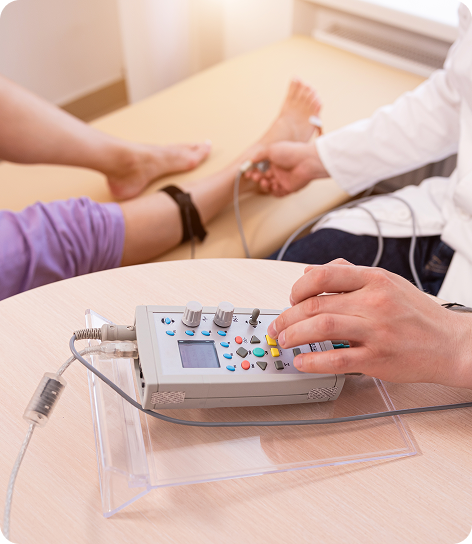
An EMG test helps determine whether the symptoms are due to a muscular problem or a nerve issue. If abnormalities are detected, the patient may be diagnosed with a neuromuscular disorder. A detailed neurological examination should precede an EMG study, as it is often considered an extension of the clinical assessment. An NCS is used to check the health of the peripheral nerves. It helps assess how effectively the body’s electrical signals travel along motor nerves.
Anatomy and Physiology
The human body relies on a sophisticated network of nerves and muscles to control movement, sensation, and many essential functions. At the heart of this system are the peripheral nerves, which carry electrical signals between the spinal cord and the rest of the body. These electrical impulses allow us to move our skeletal muscles, feel sensations, and respond to our environment.
Nerve conduction studies and electromyography (EMG) are diagnostic tests that help healthcare providers evaluate how well these electrical signals travel through the nerves and how effectively muscles respond.
The spinal cord acts as a central highway, transmitting nerve signals from the brain to the peripheral nerves, which then branch out to muscles and sensory organs. When a nerve is stimulated, either naturally or through electrical stimulation during a nerve conduction test, it sends an electrical current along its length. This process is known as nerve conduction, and the speed at which these signals travel is called nerve conduction velocity.
By understanding how nerves control muscle activity and how electrical signals travel through the body, these diagnostic procedures play a crucial role in modern clinical practice, ensuring accurate diagnosis and better outcomes for patients with neuromuscular disorders.
Who Needs an EMG and NCS?
Both tests are used for diagnosing muscle and nerve disorders. While EMG tests check whether muscles respond to nerve signals, nerve conduction studies assess nerve function. In some cases, doctors may recommend both tests to check whether a patient has a muscle or nerve condition. Some symptoms for which tests may be necessary include:
- Numbness/tingling in arms, legs, feet, or face
- Muscle twitching, spasms, and cramps
- Muscle paralysis
Preparation
Your healthcare provider will ask whether you have a pacemaker or take blood-thinning medicines. Wear comfortable, loose clothing so the technician can access the testing sites. Do not use creams, perfumes, and lotions for at least two days before the test.
The Procedure
EMG Test: You will have to sit or lie on a bed. After cleaning the skin, the healthcare provider will place a small needle with an electrode into the affected muscle. The needle electrode acts like a microphone, recording the muscle’s electrical activity without delivering stimulation. It is then connected to a machine that records the muscle’s electrical activity. There could be minor pain when the electrode is inserted. The technician will ask the patient to contract and relax the muscles during the test. An EMG test usually takes 60 to 90 minutes, depending on how many muscles need to be tested.
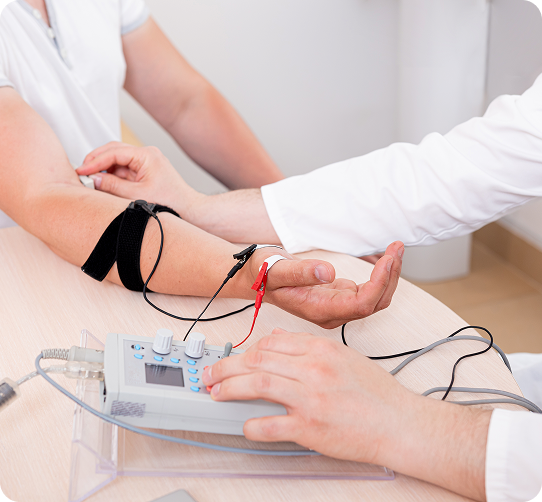
Nerve Conduction Study: You will lie on a table/bed. The healthcare provider will then stick electrodes to the skin above the nerves being tested. These are stimulating electrodes that will deliver a mild electrical pulse. Nerve stimulation is used to elicit responses from both motor and sensory nerves, and sensory nerve responses are important for diagnosing peripheral nerve disorders. The test will record muscle responses to the electrical stimulation. The technician will check how quickly the muscle responds to nerve signals. NCS provides data on nerve conduction velocity (NCV) and the amplitude of compound motor action potential (CMAP). NCS is valuable in confirming clinical diagnoses, identifying subclinical conditions, localizing focal nerve abnormalities, measuring severity, and characterizing the nature of the lesion. The procedure may take anywhere from 15 minutes to an hour.
Risks
There might be slight pain during the EMG test. If the pain is extreme, let the technician know. During the nerve conduction study, you may have a tingling sensation. There might be muscle soreness for a few days after the tests. Call your doctor if there is continuous bleeding at the injection site, pain or tenderness at the puncture sites, and other symptoms like swelling, redness, and unusual warmth in muscles.
Diagnosis of Muscle and Nerve Disorders
Tests may help diagnose one or more conditions, such as:
- Carpal tunnel syndrome
- Herniated disk
- Guillain-Barré syndrome
- Myasthenia gravis
- Muscular dystrophy (MD)
- Charcot-Marie-Tooth disease (CMT)
- Amyotrophic lateral sclerosis (ALS)
Interpreting EMG and NCS Results
The neurologist will usually write a report or summary after the tests. Your doctor will review the results to help guide treatment. NCS and EMG will not fix muscle or nerve problems, but are critical for the diagnosis. EMG results usually come back within 1 to 2 days. Abnormal EMG can indicate many conditions, which is why doctors will usually consider other tests for a confirmed diagnosis. The report for the Nerve conduction study (NCS) should arrive in two days. If the EMG results are abnormal but the NCS is normal, it may indicate a muscle disorder rather than a nerve problem.
When to Reach Out
If you have numbness or tingling in your arms, legs, feet, or face, you should check with a healthcare provider, who may recommend EMG or NCS tests to confirm the diagnosis. At Chester Neurology in Westchester or NYC, we have advanced testing facilities and an expert team of doctors and healthcare providers who can offer comprehensive care for your symptoms. Our clinic also provides other tests that may be required, including EMG and NCS tests.
Call us today at (914) 816-1941 or email info@chesterneurology.com to schedule an appointment.
We serve families in Westchester, the Bronx, Manhattan, and more, all with compassion, clarity, and commitment.
Take the First Step
Contact Us Today
Early diagnosis and correct identification makes planning, treatment, and care accessible to everyone.