
Ambulatory Video Electroencephalogram (EEG)
An electroencephalogram (EEG) is a diagnostic test used for measuring the electrical activity of the brain. The test involves small metal discs (electrodes) attached to the scalp. The electrical impulses in the brain are captured as wavy lines in the EEG recording. EEG is used for diagnosing many brain conditions, but more prominently, it is used for checking if a patient has epilepsy.

A routine EEG captures the brain’s electrical activity for about 20 to 40 minutes, and because this time frame may not be sufficient to capture events outside that window, doctors use an Ambulatory Video Electroencephalogram (EEG) for a longer recording, including the time the patient is sleeping. Patients can walk around during the test. A camera is also given to the patient so the doctor can observe any concerning events/episodes during the study and correlate this with the brain wave activity.
Who Needs an Ambulatory Video Electroencephalogram (EEG)?
If a patient has episodes that are not typical of seizures but are suspected of having seizures, this test can help establish the diagnosis. If a patient has known Epilepsy and is having breakthrough seizures on current seizure medications and treatment needs optimization, this test can help with this.
Preparation
The patient will be asked to wash their hair a day before and avoid hair styling products, as holding the electrodes in place can be hard. The doctor or healthcare provider will instruct on medications (if the patient is taking any). Consider wearing a front-open shirt on the day.
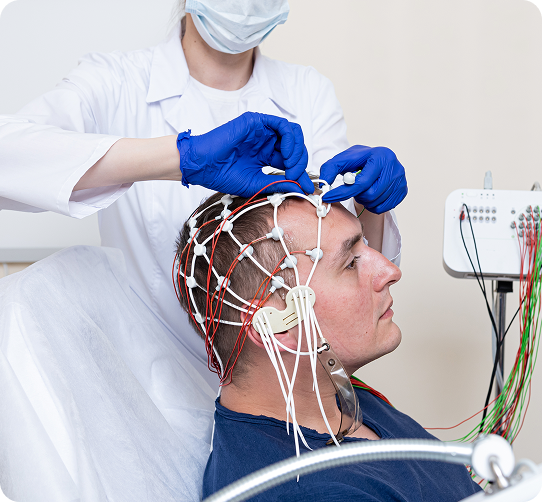
The Procedure
An ambulatory EEG test records electrical activity in the brain for a number of hours or even days. Your healthcare provider will decide whether you need an ambulatory EEG test. The steps are as follows:
A healthcare professional will place EEG wires on the scalp – The same process as with a regular EEG. However, the electrodes are placed using collodion, which helps keep the electrodes in place. The wires of the electrodes are then attached to a recorder, which is a device that resembles many portable devices.
You can keep the recorder inside your shirt pocket or on your waist. The electrodes are covered using a cap or special dressing. You can continue your normal routine for up to 72 hours while the recorder and wires are in place.
Patients are asked to keep a note of everything during that time, especially any symptoms they may have noticed. Some activities may look like an abnormal activity on the EEG, which is why doctors usually ask for notes.
During the Test
If you experience any seizure during the test, you can press a button (your healthcare provider will explain), and that will mark the time, which will allow doctors to identify patterns.
After the Procedure
You will return to the clinic after the assigned time. The technician will remove the electrodes, and the recording will be downloaded. It can take up to a week to get the results of an ambulatory EEG. There is no downtime, and you can go home immediately.
Dos and Don'ts
If your doctor has shared a log sheet, make sure you include all details.
Do not shower or swim during the duration of the ambulatory EEG.
Do not brush your hair or scratch your head, as it may affect the results
Frequently Asked Questions
What is an ambulatory video EEG and how does it work?
It is a test that records electrical activity in the brain for a number of hours or even days, using electrodes placed on the scalp and a camera so the doctor can observe events and correlate them with brain wave activity.
How is an ambulatory EEG different from a routine EEG or inpatient EEG?
A routine EEG records 20–40 minutes of activity, while an ambulatory EEG records longer, including during sleep, and allows the patient to walk around during the test.
What conditions can an ambulatory video EEG help diagnose?
It helps diagnose episodes that are not typical of seizures but are suspected of being seizures, and helps when patients with epilepsy have breakthrough seizures despite medication.
How should I prepare for an ambulatory EEG test?
Patients should wash their hair the day before, avoid styling products, follow medication instructions, and consider wearing a shirt with a front opening.
How long does an ambulatory video EEG recording typically last?
It can last hours or even days, up to 72 hours, while patients continue their everyday routines.
What should I expect during and after my ambulatory EEG test?
Electrodes are placed using collodion, covered with a cap or dressing; patients keep notes of symptoms; after the study, the recording is downloaded, and results may take up to a week.
Can I go about normal daily activities while wearing the EEG device?
Yes—patients can continue their regular routine for up to 72 hours while wearing the device.
Is an ambulatory EEG safe, and does it cause any discomfort?
It is safe. Some patients notice mild scalp irritation from the adhesive, but there is no pain and no downtime.
How are the results of an ambulatory EEG interpreted by a neurologist?
Neurologists review recorded EEG data, video footage, and patient symptom logs to determine whether the abnormal electrical activity matches the reported events.
How accurate is an ambulatory EEG for diagnosing seizure disorders?
It improves accuracy by capturing events over longer periods, including sleep, making it more likely to detect seizure activity than a routine EEG.
When to Reach Out
If you have been experiencing seizures despite taking medications, or your healthcare provider finds it necessary to go beyond a standard EEG, you may need an ambulatory video EEG.
Call us today at (914) 816-1941 or email info@chesterneurology.com to schedule an appointment.
We serve families in Westchester, the Bronx, Manhattan, and more, all with compassion, clarity, and commitment.
Take the First Step
Contact Us Today
Early diagnosis and correct identification makes planning, treatment, and care accessible to everyone.