
Parkinson's Disease
Parkinson’s disease is a nervous system disorder that affects a part of the brain. The condition affects balance, movement, and muscle control. Parkinson’s disease often causes shaking of the hands and feet. The condition is more common in men than in women and usually starts at age 60. It is one of the most common age-related degenerative brain diseases and affects the basal ganglia. Most cases of Parkinson’s disease are idiopathic, meaning the exact cause is unknown, but research is ongoing into the factors involved in developing Parkinson’s disease. Parkinson’s disease cases are most common in individuals over 60, affecting about one percent of this population.

As the disease progresses, symptoms only get worse, often causing depression, immobility, and dementia-like symptoms. The average life expectancy of a person with Parkinson’s disease is generally the same as that of a person without the disease, though complications can affect prognosis. Parkinsonism is an umbrella term that also includes Parkinson’s disease and conditions that have similar symptoms, such as corticobasal degeneration. Related disorders include progressive supranuclear palsy and other conditions that share similar symptoms but have distinct features.
Parkinson's Disease Symptoms
Parkinson’s disease symptoms (PD symptoms) encompass a wide range of clinical symptoms, including both motor and non-motor features. These clinical symptoms can vary in presentation and severity, and may serve as early indicators of the disease. The most common symptoms of Parkinson’s disease result from the loss of neurons in the substantia nigra, which produces dopamine and is critical for regulating movement.
The four primary symptoms of Parkinson’s disease are tremor, rigidity, bradykinesia, and postural instability. Patients may have one or all of the following:
Bradykinesia
This refers to slowed movements due to impaired muscle control.
Tremor
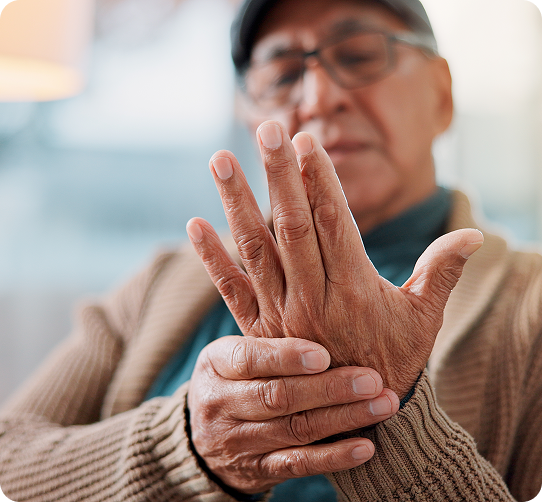
Patients also experience rhythmic shaking and involuntary movements, even when the hands or feet are at rest. In that context, Parkinson’s disease is different from essential tremor.
Stiffness
Another common symptom is rigidity, which makes it hard to move around. Patients often find it hard to move or shift positions.
Posture Issues
Stiffness, rigidity, and slowed movements often cause a patient to look hunched or stooped, especially in advanced stages of the disease.
Symptoms of Parkinson’s disease typically begin on one side of the body and may progress to affect both sides as the disease advances.
Other symptoms include less blinking, inability to write, drooling, and dysphagia. Dysphagia increases the risk of pneumonia and choking, as there is reduced control over the throat muscles. Parkinson’s disease can lead to serious complications such as choking, pneumonia, and falls in its late stages.
Non-motor symptoms may also happen, which include constipation, orthostatic hypotension, incontinence, and depression. Non-motor symptoms of Parkinson’s disease include sleep disorders, sexual dysfunction, loss of smell, constipation, and cognitive or mood changes. Sleep disorders are highly prevalent in PD, including insomnia, REM sleep behavior disorder, and restless legs syndrome. The progression of Parkinson’s disease can lead to cognitive decline in about 30% of individuals, sometimes resulting in Parkinson’s disease dementia.
In the early stages, Parkinson’s disease may present with subtle symptoms such as loss of smell (anosmia), vivid dreams, and severe fatigue.
Movement-related symptoms and other motor symptoms, such as difficulty with coordination and mobility challenges, can also impact daily functioning as the disease progresses.
Risk Factors and Causes
Parkinson’s disease is related to damage to neurons that are responsible for producing dopamine. Dopamine is a chemical messenger, and any decrease in dopamine causes irregular brain activity, which eventually triggers symptoms associated with the condition. Patients also have lower norepinephrine levels, another chemical messenger responsible for controlling many body functions. The loss of this neurotransmitter can lead to blood pressure changes in people with Parkinson’s disease. Developing PD involves a combination of genetic, environmental, and cellular factors.
The cause of Parkinson’s disease is not clear, but there are a few factors that may have an impact:
- Age
Parkinson’s disease is mainly seen in people over 60, although many see early symptoms from age 50. The condition may affect younger adults, but that is rare. Early onset PD refers to cases that develop before age 50, and early onset Parkinson’s disease may have different progression patterns and genetic influences.
- Family History
If one or more parents/siblings have PD, the risk increases for you. However, studies show that the risk is still limited unless there are many blood relatives with PD.
- Lewy Bodies
Clumps of proteins in the brain have been associated with PD.
- Genes
Specific genetic changes, especially if many family members have PD. Specific genetic mutations, such as those affecting the alpha-synuclein gene, have been linked to Parkinson’s disease.
- Environmental Factors
Exposure to toxins, such as MPTP (called synthetic heroin), and other environmental factors. Environmental factors, such as exposure to pesticides and industrial pollutants, may contribute to the risk of developing Parkinson’s disease.
- Exposure
Long exposure to certain herbicides and pesticides
Oxidative stress has been detected in the brains of people with Parkinson’s disease, indicating potential cellular damage. Traumatic brain injury has been associated with an increased risk of developing Parkinson’s disease.
Genetic factors play a role in increasing the risk of developing PD, but inherited cases are rare. Certain lifestyle factors, such as tobacco use and caffeine consumption, have been associated with a decreased risk of developing Parkinson’s disease.

Diagnosis and Medical Assessment
There isn’t one singular test to diagnose and confirm Parkinson’s disease. Neurologists and healthcare providers usually check symptoms and medical history, and may order a few tests.
Your Diagnostic Options
Your doctor will decide which tests you may need based on your symptoms.
Physical and Neurological Exam
These tests test thinking, mental capabilities, senses, and reflexes.
Blood and Lab Tests
These are usually recommended to rule out other conditions.
Imaging Tests
MRI, along with brain ultrasound and PET scan, can help rule out other diseases.
Genetic Testing
Tests that check gene changes, especially if there is a known family history of PD.
In some cases, a particular kind of single-photon emission computerized tomography (SPECT) scan is suggested for Parkinson’s disease. This is called the dopamine transporter (DAT) scan, although its use is rare.
Parkinson's Disease Treatment Options
There is no cure for Parkinson’s disease, but medications can help ease the symptoms and improve quality of life. Treatments include:
Medicine
Because patients have lower levels of dopamine, treatments focus on increasing the same. Dopamine cannot be given directly, so drugs like Carbidopa-levodopa can help. Levodopa becomes dopamine after being passed into the brain. Patients may experience side effects, such as nausea and light-headedness. Carbidopa-levodopa benefits may wane over time, so that patients may need higher doses. Doctors also suggest dopamine agonists. These dopamine agonists mimic the effects of dopamine but aren’t as effective as Levodopa. Options include Pramipexole, Rotigotine, and Apomorphine. Neurologists also often use other medications, such as Monoamine oxidase B (MAO B) inhibitors, as needed.
Surgery
Deep-brain stimulation, or DBS, can help patients with Parkinson’s disease. Electrodes are placed in the brain and connected to a device implanted in the chest. The pacemaker-like device sends electrical pulses to the brain, which can help minimize symptoms. DBS can be helpful for patients with severe tremors and involuntary muscle movements. There are risks associated with deep-brain stimulation, and while many patients see improvements, DBS doesn’t prevent the condition from getting worse.
In many cases, doctors also recommend therapies to improve symptoms and quality of life. Occupational therapists help with dressing and regular activities, while a speech therapist can help with speaking better. Exercise and physical therapy can also help.
Lifestyle Changes
Adopting healthy lifestyle changes can play a vital role in managing Parkinson’s disease symptoms and enhancing overall well-being. Regular aerobic exercise, such as walking, swimming, or cycling, helps maintain mobility, balance, and flexibility, and may even slow disease progression.
A balanced diet rich in fruits, vegetables, whole grains, and lean proteins provides the nutrients and antioxidants needed to support brain health.
Prioritizing good sleep hygiene and practicing stress management techniques, like meditation or yoga, can help reduce fatigue and improve mood. Staying socially active and engaged in enjoyable activities also supports mental and emotional health.
Working closely with your healthcare team to create a personalized plan that includes these lifestyle changes, alongside medical treatments, can make a significant difference in how you manage symptoms and maintain independence.
Coping and Support
Living with Parkinson’s disease can be challenging, but connecting with support groups and accessing community resources can make a significant difference. Support groups—whether in-person or online—offer a safe space to share experiences, exchange advice, and find encouragement from others facing similar challenges. Counseling and therapy can help manage the emotional impact of Parkinson’s, including stress, anxiety, and depression.
Collaborating with your healthcare team to develop a comprehensive plan can help you manage symptoms and adapt to changes as the disease progresses. Staying informed about Parkinson’s disease, advocating for your needs, and reaching out to organizations like the Parkinson’s Foundation can provide valuable education, support, and a sense of empowerment for both patients and their families.
When to Reach Out
If someone you know is struggling with Parkinson’s disease or has been experiencing symptoms like tremors in Westchester or NYC, don’t delay calling for help. Our team at Chester Neurology has all the testing facilities and treatments, and our experts can help plan PD treatment. Because the symptoms of Parkinson’s disease often overlap with other brain-related conditions, it is best to seek help sooner rather than later.
Call us today at (914) 816-1941 or email info@chesterneurology.com to schedule an appointment.
We serve families in Westchester, the Bronx, Manhattan, and more, all with compassion, clarity, and commitment.
Take the First Step
Contact Us Today
Early diagnosis and correct identification makes planning, treatment, and care accessible to everyone.